From Provenance to Permanence: the Story Behind Bespoke Joinery
Ask someone who makes furniture what makes a good piece of joinery and they are unlikely to start with the finished photograph.
They will probably talk about the timber. They might talk about how it has been selected, how it behaves, how it is going to be used. They will talk about the drawing, the detail and whether something that looks straightforward on paper will actually work when you come to make it. And they will almost certainly talk about the people.
For Graham Goodall, Managing Director of Ashton Bespoke, that is where much of the value in bespoke work lies.
“We are fortunate to have people with a huge amount of experience around us,” he says. “You learn from the people you work with, and that knowledge is something you carry forward.”
It is an attitude that is evident in the workshop at Ashton Bespoke, where traditional making skills sit alongside modern technology and technical design. The technology is important; it has changed what a workshop can achieve, particularly when projects become more complex, but it has not changed the need for someone who understands the material.
Knowing the Material
There is a difference between specifying a material and knowing it. Timber, for example, has its own character. Grain, colour, movement and variation all influence how it can be used. A veneer might look one way in a sample and quite different when it is laid across a larger surface. Those things are part of the maker's knowledge; they influence how a piece is designed, how it is constructed and sometimes whether a particular approach is the right one in the first place. It is why the conversation at the beginning of a project matters.
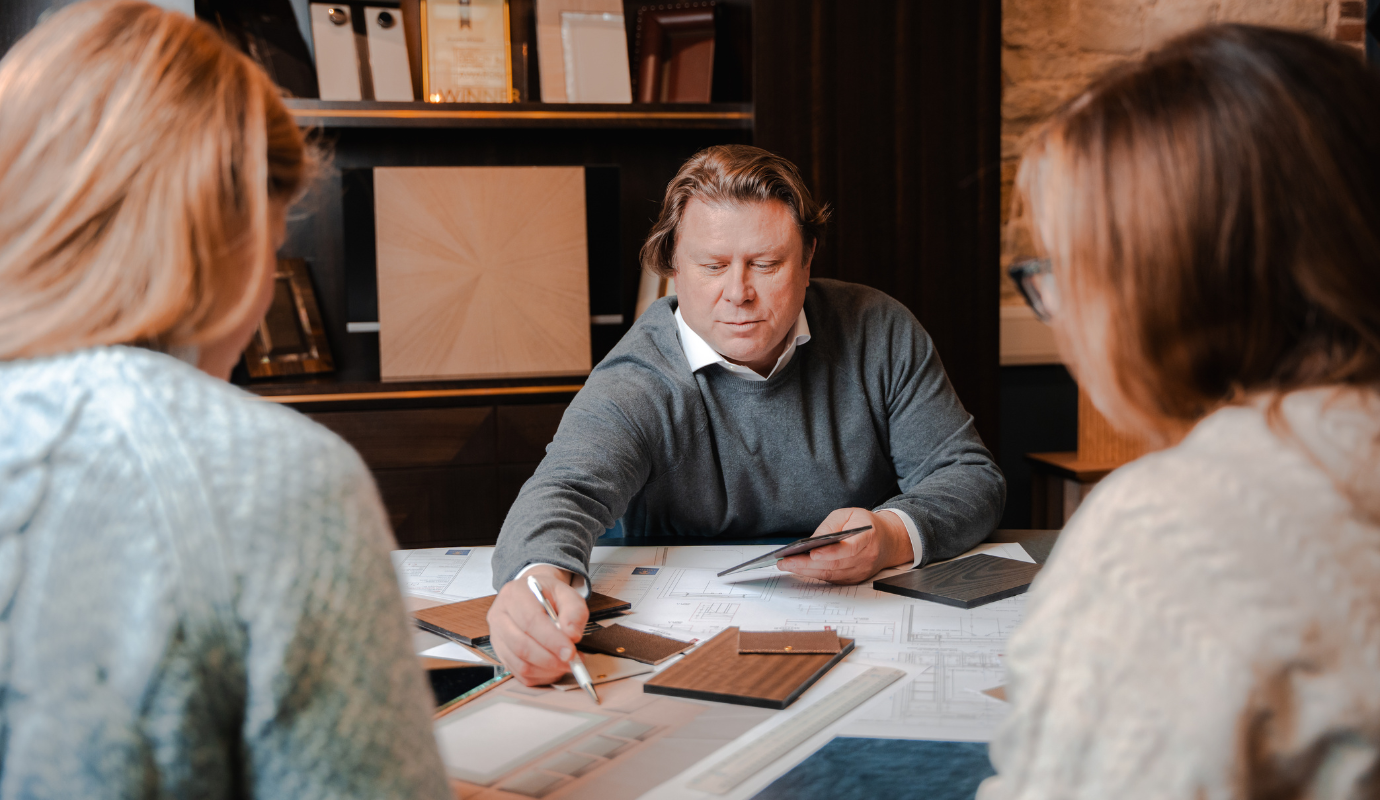
At Ashton Bespoke, the brief is not simply passed from designer to workshop. It is discussed, questioned and developed with the people who will ultimately have to make it. As Graham puts it:
“Collaboration is at the heart of everything we do. When designers, makers and clients share ideas openly, you create the kind of momentum that leads to incredible work.”
That collaboration can be very practical. A detail might need changing because of the way a material will behave. A piece may need to be constructed differently to allow for installation. Something that looks simple in a drawing may need considerable engineering behind it. The earlier those conversations happen, the better.
What the Drawing Doesn't Tell You
One of the less visible parts of bespoke joinery is the amount of thought that happens before anything is made. There are site measurements, technical drawings, samples and three-dimensional models. There are questions about tolerances, access and how different materials will meet. The finished piece may look uncomplicated but getting it there may not have been.
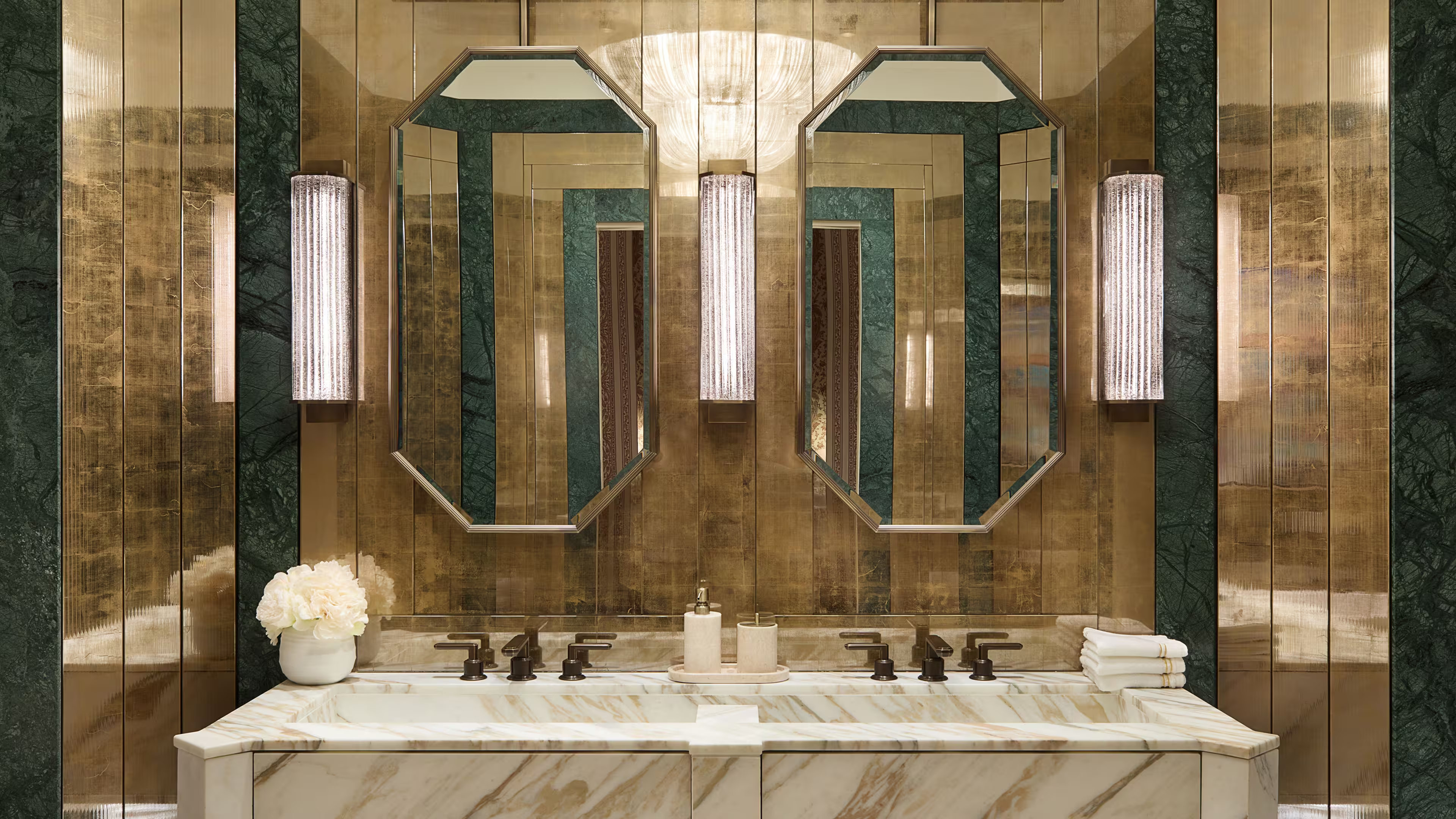
A recent Ashton Bespoke project at WOW!house was a good example. The team had just four days to install a room involving timber, stone and glass, with complex geometry and very tight tolerances. The solution was to pre-build the room in the workshop, creating templates and resolving the difficult parts before arriving on site. That is not particularly visible in the finished room, nor should it be. When everything has been properly considered, the final result tends to look simple.
Where Technology Helps
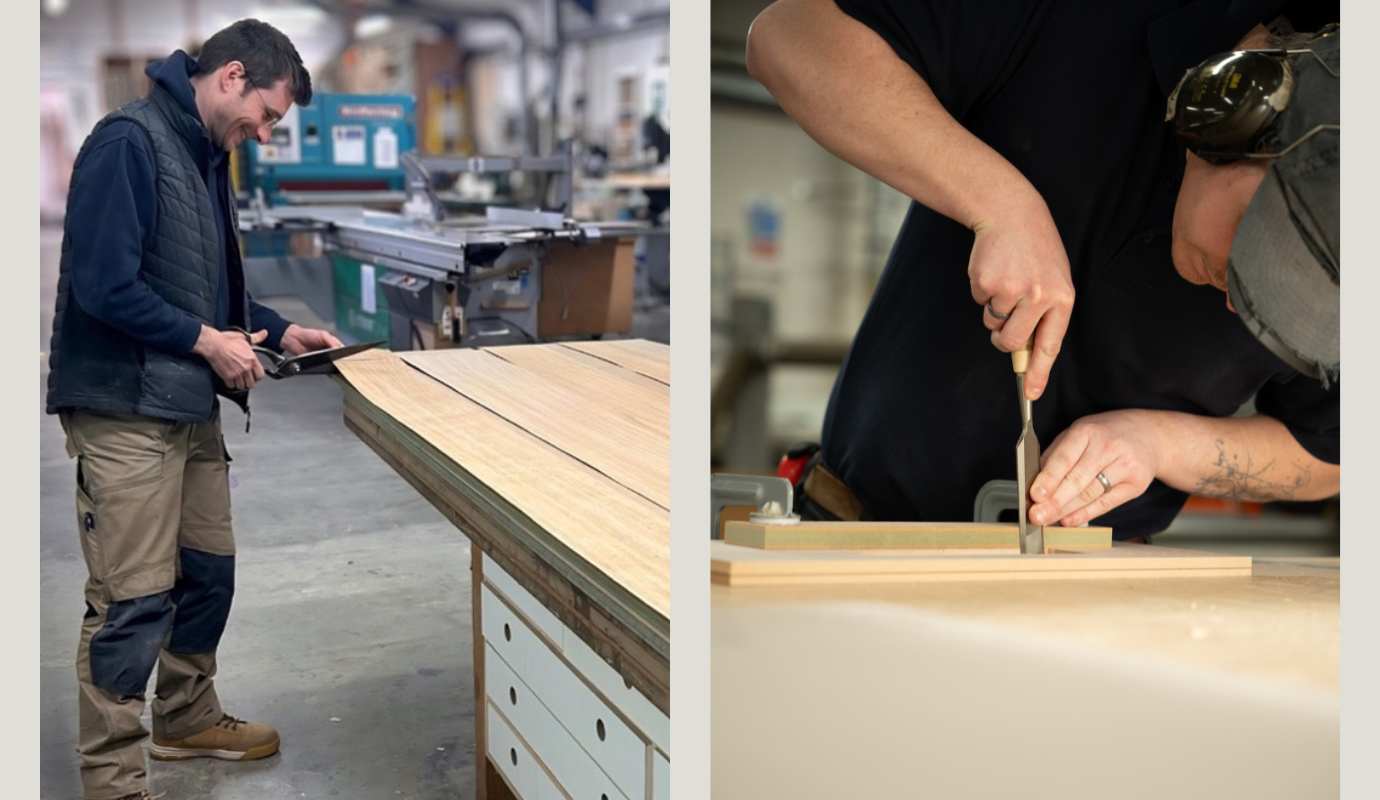
There is sometimes a temptation to think of traditional craftsmanship and modern technology as two different approaches, but in a good workshop, they are not.
CAD and digital modelling allow the team to understand a complicated piece before it is made. Modern machinery can achieve levels of accuracy that would be extremely difficult by hand alone, but the technology still needs people who know what they are looking at.
A computer can model a joint, but it cannot decide whether the detail feels right. That judgement comes from experience. At Ashton Bespoke, craftspeople use traditional skills alongside modern technology, allowing the workshop to take on work that is both technically demanding and highly individual. For Graham, that balance is important.
“The technology gives us another set of tools,” he explains.“But the craft is still in the people.”
The Details People Don't Notice
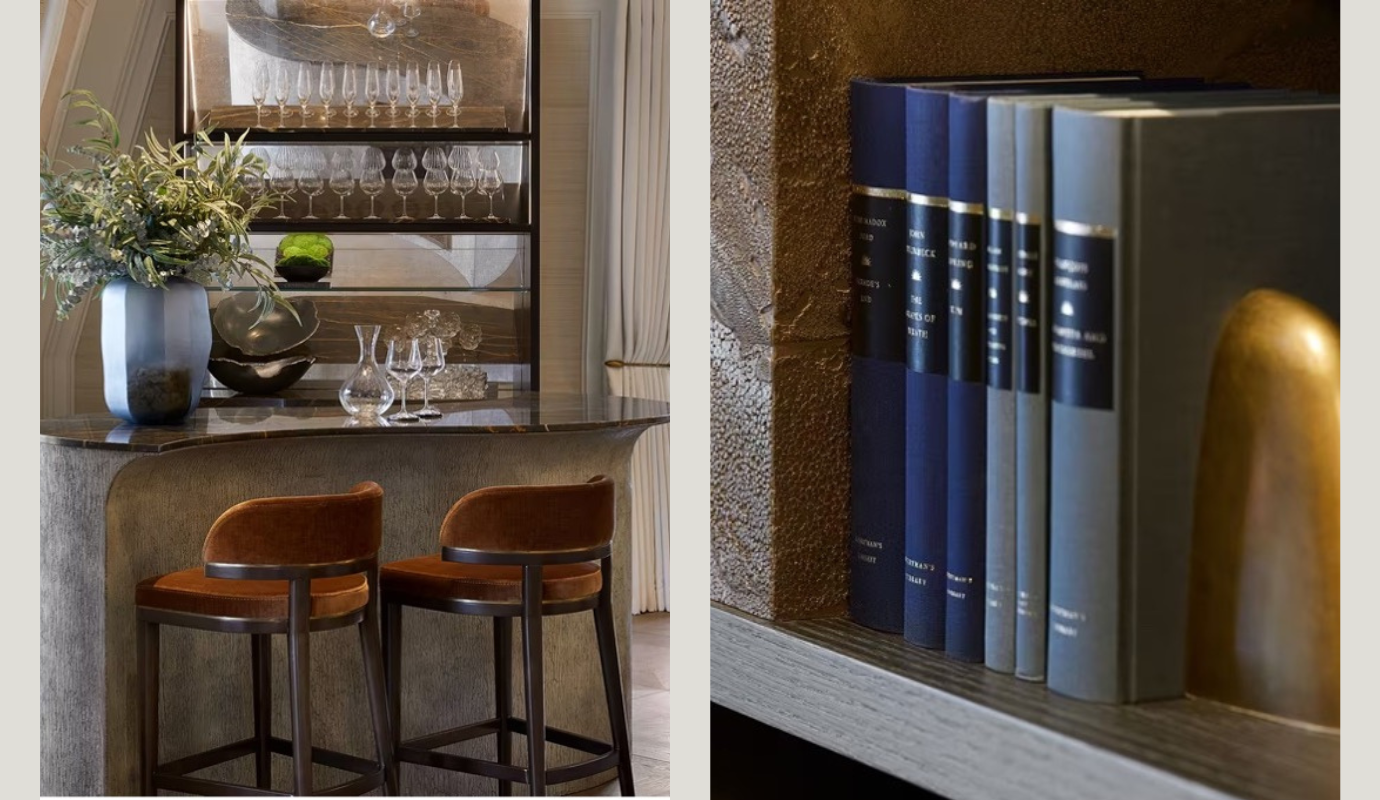
There is a strange thing about good joinery: the better some details are resolved, the less you notice them. A door aligns perfectly. The grain continues across a run of cabinetry. A junction between materials is clean. A drawer feels right when it opens. Nobody necessarily stops to ask how it was achieved, and that is fine – the maker probably has.
At Ashton Bespoke, the team describes every piece as “carrying the mark of its maker”. That does not necessarily mean a visible mark. It can be the decision to remake something because it isn't quite right. It can be the way a finish has been applied or the care taken over a joint that most people will never see. Those decisions accumulate and are what give a finished piece its character.
Making Something For its Place
Perhaps this is what distinguishes bespoke work most clearly; there is no standard answer. A piece is being made for a particular room, a particular building and a particular client. The architecture, the materials around it and the way the space will be used all have to be considered.
That can make the process more involved. It can also make it more interesting. For the maker, every project presents a slightly different problem to solve, and that is part of the appeal.
What Gets Passed On
There is also something important about the word ‘craftsmanship’. It is sometimes used simply to describe the finished product, but for a workshop like ours, it means something broader. It is knowledge passed from one person to another. It is knowing how a material behaves because you have worked with it for years. It is learning from someone more experienced and, in time, passing that knowledge on yourself. That is how a workshop develops, by carrying what is valuable forward and finding new ways to use it.
For Graham, the people remain central to that. The machines may change, the technology will continue to develop, designs will become more ambitious, but someone will still need to make the judgement, care about the detail, and stand back from a finished piece and decide whether it is right.
From Provenance to Permanence
Perhaps that is what gives a piece of bespoke joinery its longevity. Not simply the material or the construction, but everything that has gone into it: where the material came from, who worked with it, what they knew, the decisions made along the way, and all the things that were changed, refined or sometimes started again.
By the time the finished piece is installed, most of that story has disappeared, and what remains is the joinery itself. Though, if it has been made well, it becomes part of the room without needing to announce itself. That is the quiet satisfaction of the maker - knowing how much went into it, even when nobody else ever needs to know.
To discuss an upcoming project, or to request a copy of our Credentials Document and learn more about our process and portfolio, please get in touch.